
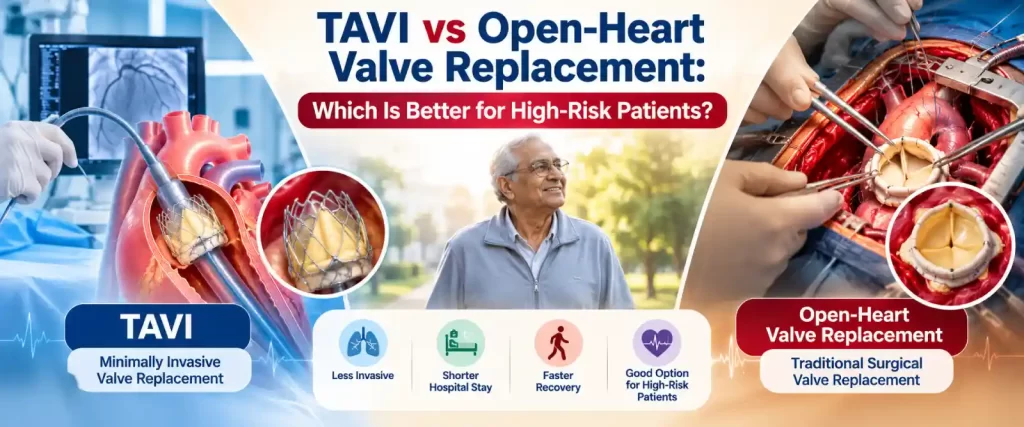
Think of an 82-year-old grandfather who used to walk to the market every morning. Lately he stops halfway, one hand on his chest, out of breath. His doctor says the aortic valve has narrowed and needs replacing. Then comes the frightening question: open-heart surgery at this age? For many families, TAVI Treatment in Kolkata is the answer that lets them breathe easier.
The Problem Inside the Valve
The aortic valve is the heart’s main exit door. With age, calcium stiffens it, and the heart strains to push blood through. Doctors call this aortic stenosis. Watch for:
- Breathlessness on mild effort
- Chest tightness
- Dizziness or fainting
- Unusual tiredness
Tablets can ease symptoms but cannot reopen the door, so aortic stenosis treatment in Kolkata usually means replacing the valve.
Two Routes to a New Valve
Among the aortic valve replacement options in Kolkata, two stand out. In open surgery, the chest is opened, the heart is paused, and a machine takes over while the valve is swapped. TAVI (also called TAVR) works differently. A folded valve travels up a thin tube from the groin and settles inside the old one. There’s no big chest cut, which is why it counts as minimally invasive aortic valve replacement.
Side by Side
TAVI vs surgical valve replacement, in plain terms:
- Cut: a small puncture vs a long chest incision
- Heart-lung machine: not needed vs needed
- Hospital stay: usually 2 to 4 days vs a week or more
- Back to routine: often 1 to 2 weeks vs 2 to 3 months
These are typical figures, and every patient is different.
Who Gains the Most?
TAVI for high-risk patients makes sense when major surgery may be too much for the body. Typical examples:
- Frailty or advanced age
- Weak lungs or kidneys
- Earlier bypass or chest surgery
- Other illnesses that raise anaesthesia risk
The same holds for TAVR for high-risk patients, since the letters differ but the valve is the same. The TAVI benefits for elderly patients are easy to see: less pain, less blood loss, fewer days in bed. Families often notice the TAVR benefits for elderly patients on day two, when Dad is already walking down the corridor. That is why TAVI Treatment in Kolkata is often suggested to frail patients.
The Honest Downsides
No option is perfect.
- Some patients need a pacemaker afterwards
- A small leak can occur around the new valve
- Long-term durability data is shorter than for surgery
Younger, lower-risk patients, or those who also need bypass, often do better with surgery. So TAVI vs open-heart valve replacement in Kolkata has no single winner. A heart team reviews each CT scan, and TAVR vs open-heart surgery is decided patient by patient.
What to Expect from TAVI Treatment in Kolkata
A TAVI procedure in Kolkata, or a TAVR procedure in Kolkata, usually goes like this:
- CT scan, echo and blood tests first
- Light sedation or short anaesthesia
- Valve placed in roughly one to two hours
- Walking the next day
TAVI recovery time for daily routines is often one to two weeks. TAVR recovery time is the same procedure by another name, though it can run longer when other health problems are present.
Why Consult Dr. Bikash Majumder
Choosing a TAVI Doctor in Kolkata takes judgment as much as skill. Dr. Bikash Majumder is worth a consultation if you want an honest opinion on whether a catheter-based valve suits you or your parent. A good TAVR Doctor in Kolkata reads your scans, explains the risks, and says plainly when surgery is the wiser road. Families exploring TAVI Treatment in Kolkata will find that clarity as valuable as the procedure itself.
Final Word
A narrow valve is serious, but it isn’t a verdict. Ask early, ask questions, and speak with Dr. Bikash Majumder to see whether TAVI Treatment in Kolkata fits your situation.